

Our therapies
Ametu Therapy is not a single method. It’s the result of years of study, practice, and hands-on testing of three manual traditions — Yumeiho, Amatsu, and Shiatsu. From each of them, we took what actually works on muscles, joints, and movement patterns, and combined it into one coherent approach.
This page explains what these traditions are, where they come from, and what we carried forward — and why.
Shiatsu
What is Shiatsu?
Shiatsu literally means ‘finger pressure’ in Japanese, and is a manual therapy tradition developed in Japan in the 20th century with roots in traditional Chinese medicine. In its traditional form, Shiatsu works along the body’s meridians — channels associated in Eastern medicine with energy flow and internal balance.
Shiatsu as a tradition covers a wide range, and different practitioners emphasise different aspects. What they all share is the use of rhythmic, targeted pressure on specific points in the body — and it is here that the practical, physical effect on musculature is well established within manual therapy more broadly.
What we took from Shiatsu?

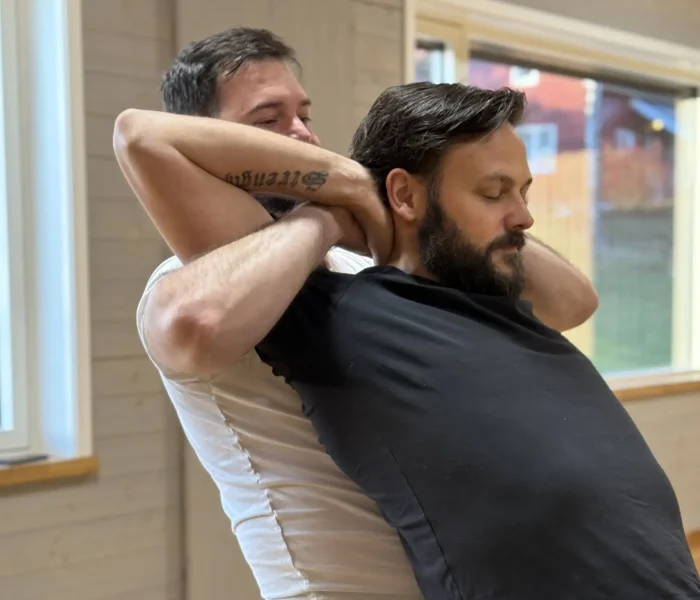
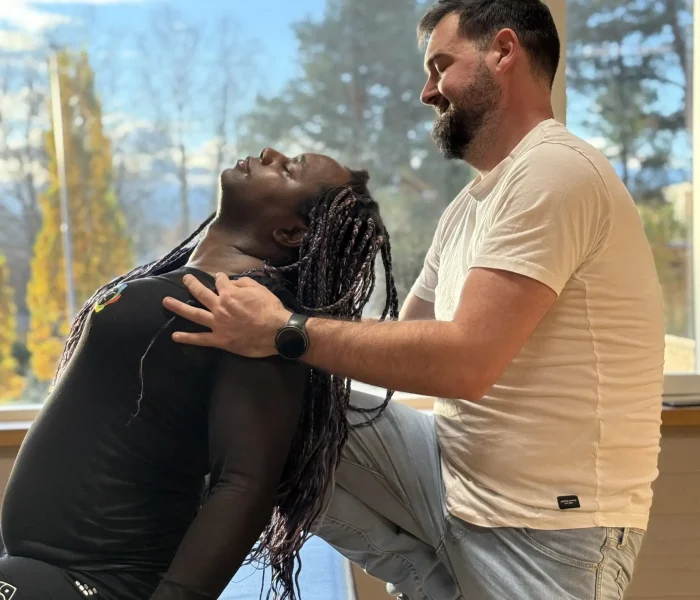
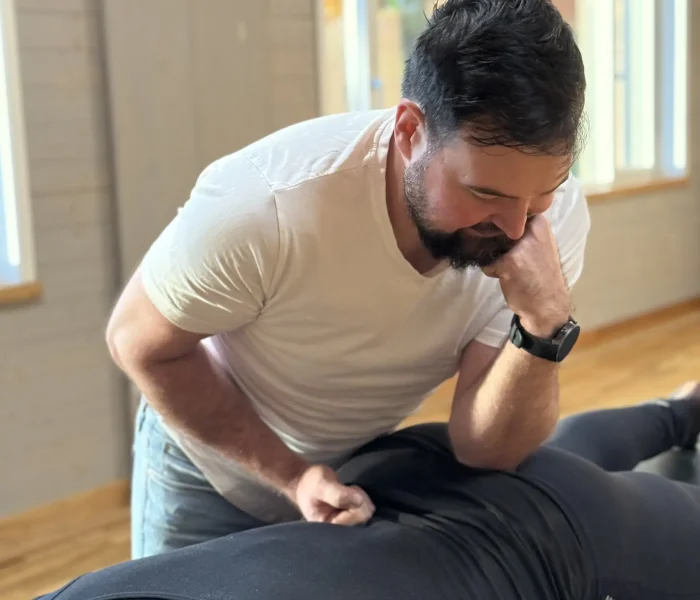
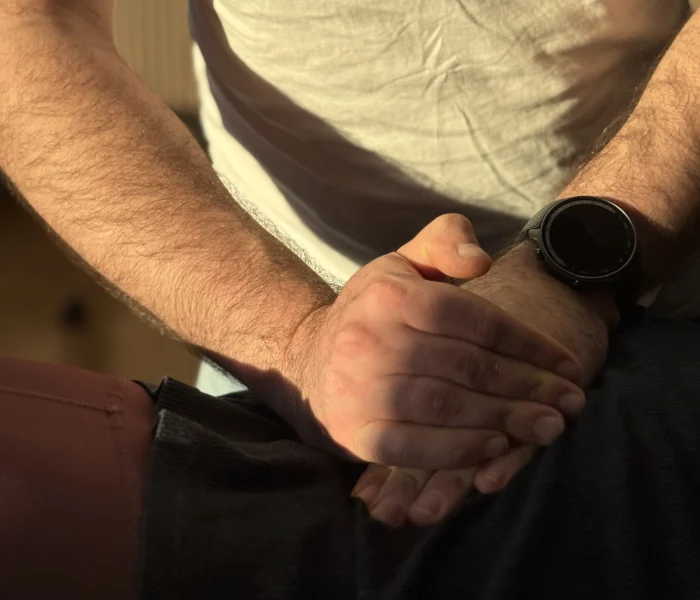
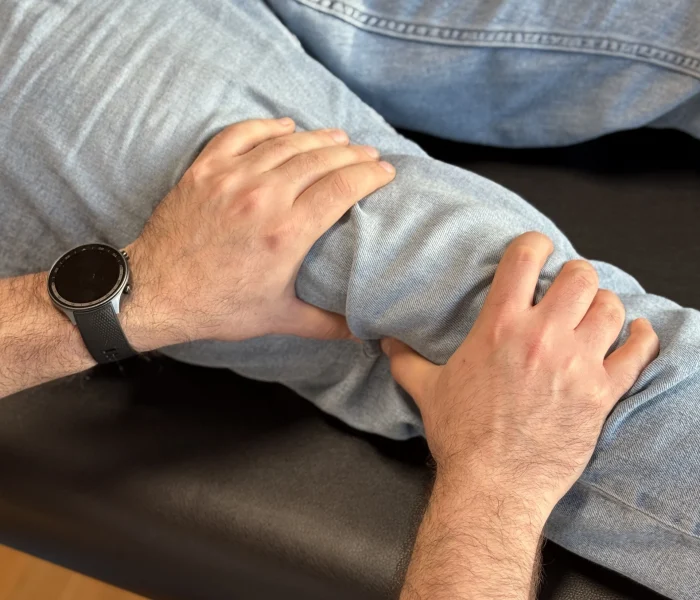
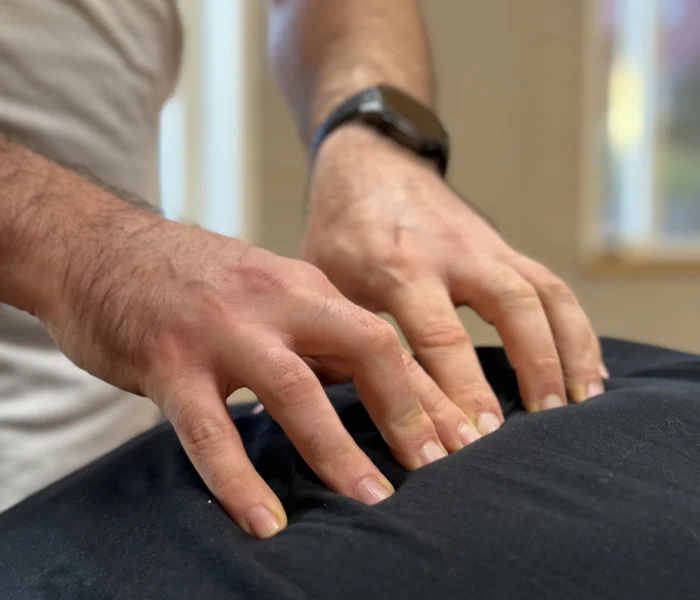
Shiatsu works with many of the same points on the body that are used in acupuncture — a treatment most people are familiar with and that is well established in Norway. The difference is the tool: acupuncture uses needles, Shiatsu uses the hands.
These are the points we use in Ametu Therapy. Sustained, targeted pressure in the right places gets the muscle to release its tension — no needles, no equipment. For many people it is also a good option for those who are drawn to the idea behind acupuncture but are not comfortable with needles.
Amatsu
What is Amatsu?
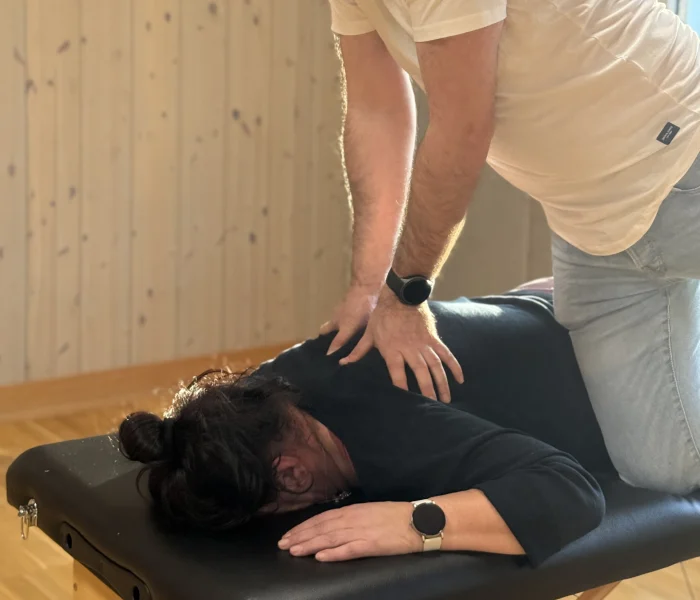
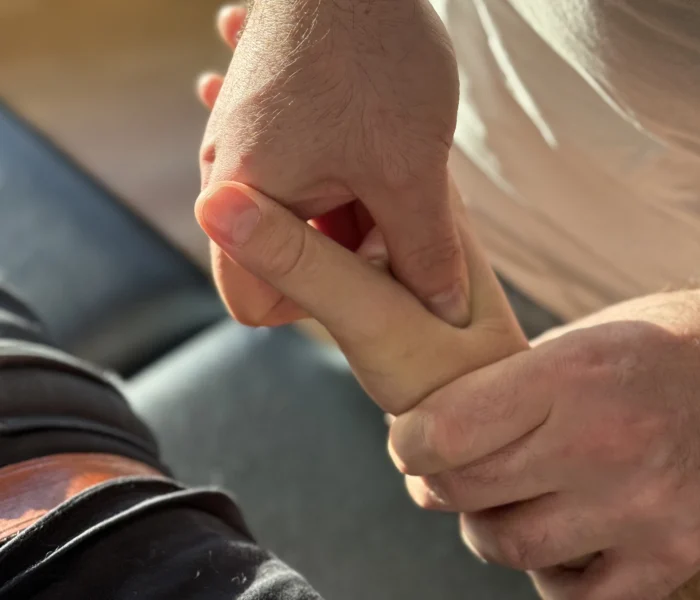
Amatsu is a Japanese manual tradition rooted in ancient martial arts principles, brought into a structured modern form by Dennis Bartram in collaboration with Japanese masters in the late 20th century. The method combines knowledge of the body’s structural balance with gentle mobilisation of soft tissue and joints.
What distinguishes Amatsu from many other manual methods is its focus on movement patterns rather than isolated symptoms. Amatsu looks at how the body moves as a whole — and looks for where in that movement something is locked, compensated, or out of rhythm. Treatment is often surprisingly gentle, but the work is deep and precise.
Amatsu is particularly used for chronic musculoskeletal problems, reduced mobility, and situations where the body has developed compensation patterns over a long period.
What we took from Amatsu?
From Amatsu we took the systematic way of reading the body — looking for compensation patterns rather than just working where it hurts. This makes treatment more precise: instead of working blindly on a painful area, we first find out why it got that way.
We also use Amatsu’s techniques for gentle joint mobilisation and soft tissue release — particularly useful for clients who are sensitive, in an acute phase, or where strong pressure would do more harm than good.
Yumeiho
What is Yumeiho?
Yumeiho is a manual therapy tradition with Japanese and Romanian roots, developed by Saionji Masayuki in the 1970s. The method is built on the principle that many physical complaints originate from misalignment in the pelvis and spine — and that when these structures are out of balance, the rest of the body compensates, gradually creating tension, pain, and reduced mobility elsewhere.
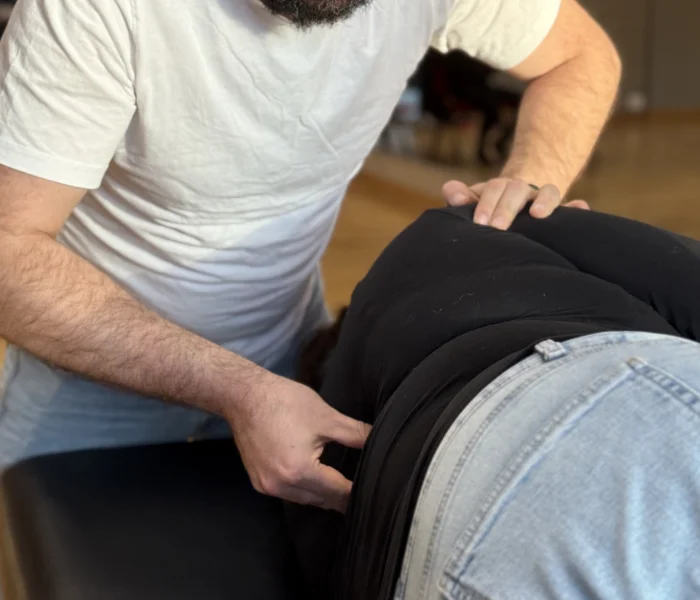
Yumeiho works through deep pressure, stretching, and joint mobilisation to restore this balance. It is a physical, hands-on method — no tools, no machines. The practitioner uses their hands, forearms, and bodyweight to reach deep into the musculature and release structures that have become locked.
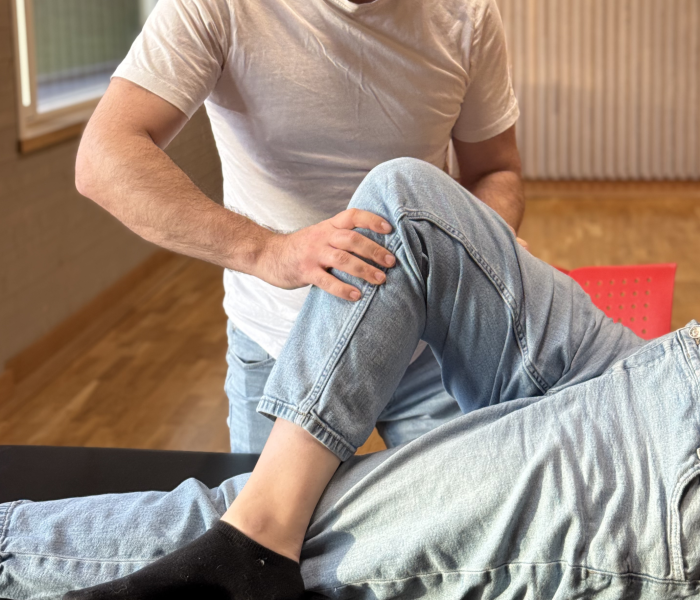
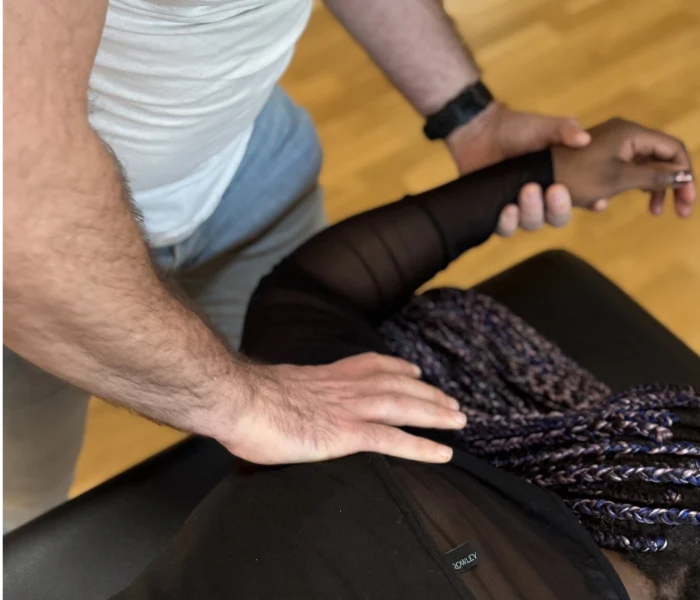
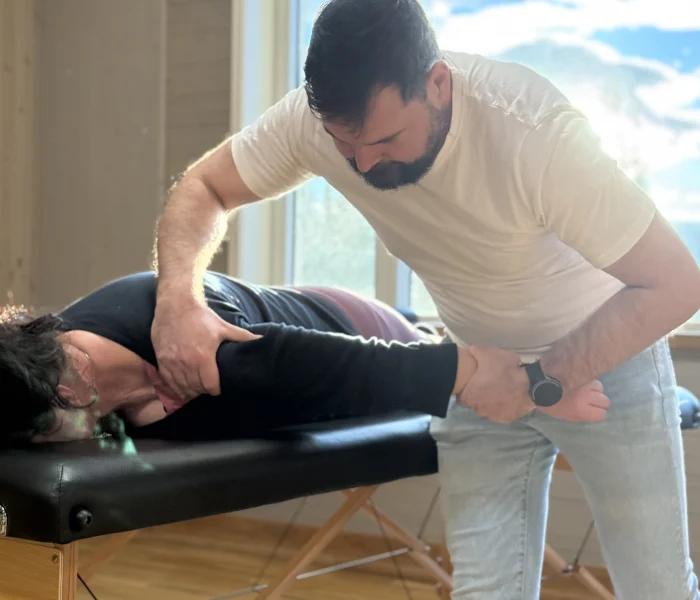
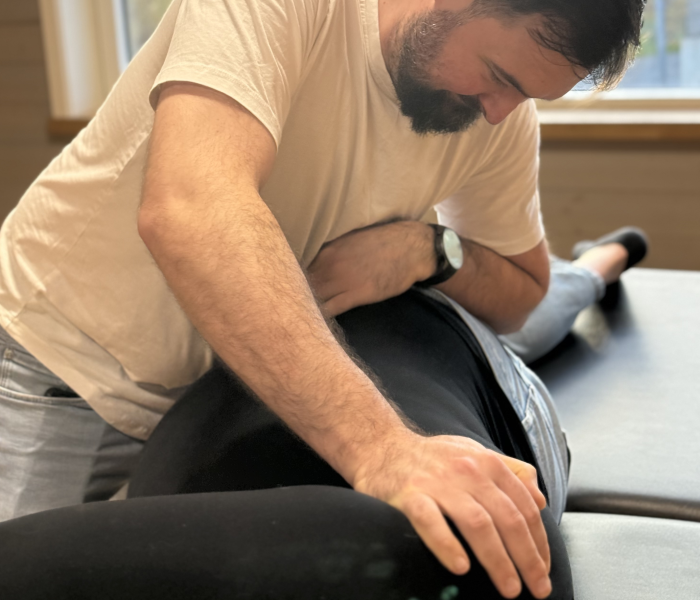
The method is particularly well known for its work with the hip joints, lower back, and pelvis — and is widely used for people who sit for long periods, have poor posture, or struggle with chronic back pain.
What we took from Yumeiho?
From Yumeiho we primarily took the approach to the body as an interconnected system — the idea that the source of a problem is rarely where the pain is felt. This thinking underpins how we start every session: with an assessment of the body’s overall movement patterns, not just the area you point to.
We also use Yumeiho’s techniques for deep pressure and mobilisation of the hip joints and lower back — particularly effective for clients with long-standing stiffness or pelvic imbalance from years of desk work.

Reflexology
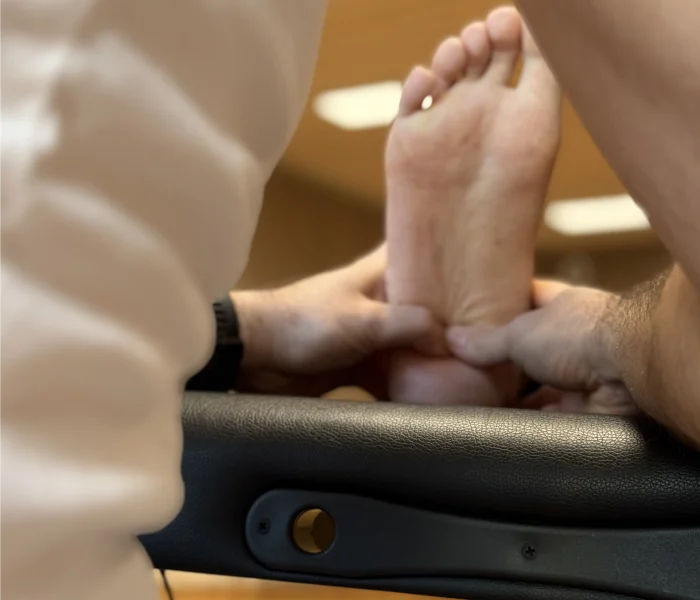
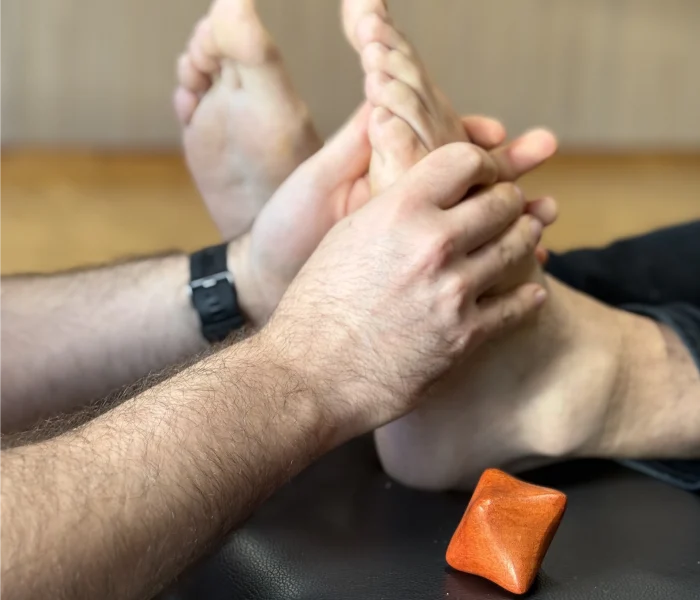
Reflexology is an ancient manual tradition with roots in several cultures, including Chinese, Egyptian, and Native American folk medicine. The method is based on the idea that specific zones on the feet are connected to different parts of the body, and that targeted pressure on these zones can have a positive effect elsewhere.
At Ametu, we use reflexology as it works best in practice: as a gentle, non-invasive treatment of the feet that promotes deep relaxation and improved circulation. Most people find it surprisingly intense for a foot treatment — and many feel the effect well up into the body.
Reflexology is the only treatment we offer that is not part of the Ametu Therapy method. It stands on its own, with its own tradition and its own clients.
We offer it because it works for those who seek it — and because we are the only practice in the area that does.
A specific use: from week 38 of pregnancy, reflexology can be used as a gentle stimulation for expectant mothers who wish to encourage labour naturally. Get in touch to book a session.Acupressure and trigger point therapy
A technique, not a tradition
Acupressure and trigger point therapy are not independent therapy traditions in the same way as Yumeiho, Amatsu, and Shiatsu — they are techniques that appear across multiple manual methods, including the three above.
The principle is straightforward: sustained, targeted pressure on a tense muscle point forces the muscle to release. It is one of the most widely used techniques in manual therapy worldwide, and a central part of how we work in every session at Ametu.
We mention it explicitly because it is something many clients recognise from physiotherapy, sports massage, or other treatments. If you have heard of trigger point therapy, it belongs to the same family.
Kinesiology taping
Support between sessions
Kinesiology tape is an elastic tape applied to the skin over tense or overloaded muscles. It is designed to follow the body’s movement — unlike rigid support tape, it doesn’t restrict movement, but gives the musculature a light, continuous signal to hold the right position.
We use kinesiology taping as a supplement to treatment — not as a treatment in itself. After a session, tape can help the body hold onto the result a little longer, reduce swelling, and support muscles that are finding their way back to proper function.
It is particularly useful during pregnancy, where the tape can take some of the load off the belly and provide noticeable relief in the back and pelvis.
HIIT - Office edition
Training built on the same principles
Our HIIT programme wasn’t added to fill a gap in the timetable. It’s built on exactly the same principles as Ametu Therapy: the body works best when it moves correctly, and desk work creates systematic imbalances that need to be actively counteracted.
The programme is specifically designed for office workers and beginners — people who sit a lot, move little, and may not have exercised in a while. Sessions combine high-intensity intervals with exercises that directly address the most common problems from sedentary work: tight hip flexors, weak core, and rounded back.
Everything is done with bodyweight. All exercises can be adapted to your level. You don’t need to be fit to start — that’s rather the point.
Why hiit and not regular training?
High-intensity intervals deliver significant health benefits in a short amount of time — which matters for people with busy lives. But what we place equal weight on is the structure: warm-up, intervals, cool-down, and stretching in the right order. Not out of habit, but because that’s how the body handles load most effectively.
Guided stress management
Stress is not just a feeling. It’s a physical state — muscles held tense, breathing that becomes shallow, a nervous system that can’t switch off. Over time, this settles in the body the same way physical strain does.
Guided stress management is a structured 30-minute session that uses three well-established methods to break this pattern.
Progressive muscle relaxation
is the core of the session. We work systematically through the body from the feet upward — you consciously tense the muscles in each area, hold, and release. The technique is well established in stress management and sleep therapy, and works by teaching the body the difference between tension and relaxation — actively, not passively.
Breath control
is used throughout the session to keep the nervous system calm. We use two techniques: diaphragmatic breathing (in for 4 seconds, out for 6–8 seconds) which activates the parasympathetic nervous system, and box breathing (in 4, hold 4, out 4, hold 4) used to reset between phases.
Guided colour visualisation
is the focusing tool that ties it all together. Inspired by the rainbow and chakra tradition — not as spiritual practice, but as a concrete mental technique. At each area you picture a coloured disc spinning. Too fast? Slow it down. Too slow? Speed it up. The goal is not perfection — it’s to give the mind something concrete to work with so it doesn’t wander. When the mind is anchored in the body, the body can let go.
The session ends with a quick review of all areas — a mental check that the whole body is in balance.
No meditation experience needed. No belief required. Just show up and follow along.